
DailyPetCare Blog
How Much Should a Cat Sleep – Norms and When to Worry
A cat can sleep as much as 18 hours a day, and that's normal. Find out how much sleep cats need at different ages and when a change in sleep rhythm should worry you.
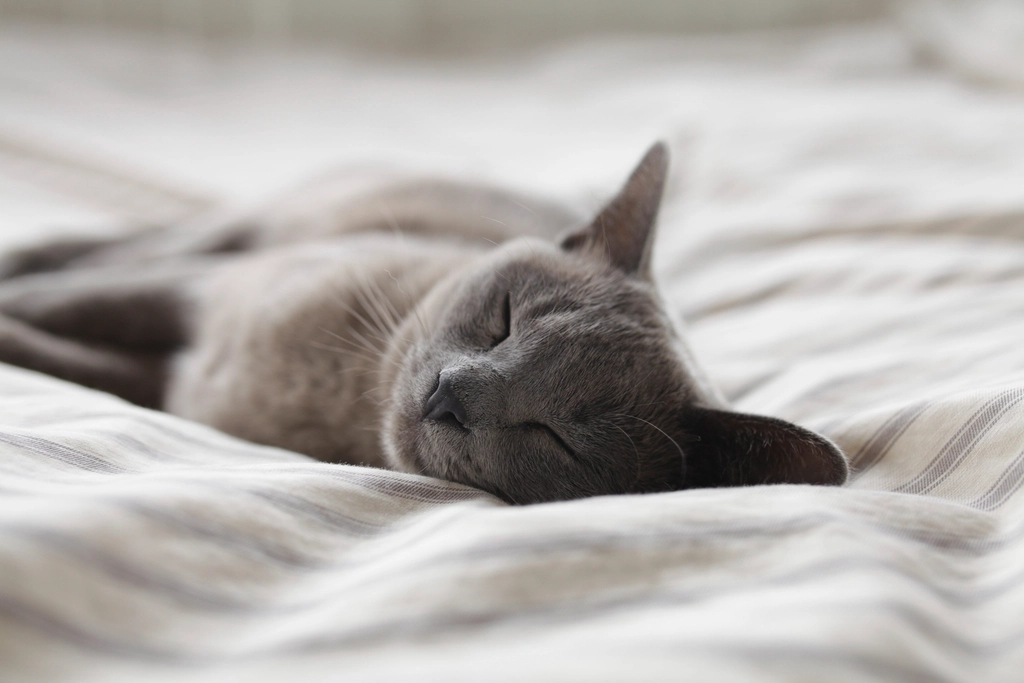
How many hours a day should a cat sleep
An adult cat sleeps 12–18 hours a day on average, and a senior cat can sleep as much as 20 hours – that's normal behavior, not a symptom of illness. What should raise concern is a sudden change to that rhythm, especially combined with a drop in appetite.
Kittens sleep even more than adult cats, because sleep supports intensive development in the first months of life. In seniors, extended sleep protects joints and bones that are no longer as resilient as in youth. The warning sign isn't the length of sleep itself, but a sudden change to it, combined with a lack of appetite, avoiding play, or the cat withdrawing.
How much sleep a cat needs at different ages
Here are the rough sleep norms depending on a cat's age:
- Kitten – the most sleep of any age group, supporting intensive development.
- Adult cat – 12–18 hours a day on average, with active periods mainly at dusk and dawn.
- Senior cat (10+ years) – up to 20 hours of sleep a day, which is normal, not a sign of illness.
- Bored or under-stimulated cat – may sleep more than it needs, as a reaction to a lack of play and attention.
- A sudden change in sleep rhythm – warrants observation, especially if accompanied by a change in appetite.
Why long sleep in a cat isn't a reason to worry
Cats naturally have a high need for sleep – a holdover from wild ancestors who conserved energy between short, intense hunting bouts. That's why the sheer length of sleep, even 18–20 hours a day, isn't a warning sign but a normal part of feline physiology, regardless of whether the cat is strictly indoor or goes outside.
What's actually worth watching for is a change relative to that particular cat's usual rhythm – if it always slept 14 hours and now sleeps 20 and is also eating less, that's worth a consultation. Context matters too: increased sleepiness combined with apathy, avoiding play, or a change in litter box use means more than the number of hours slept on its own.
Kitten, active cat or senior cat – when to react to a change in sleep
If you have a kitten, long sleep is natural and shouldn't worry you, as long as it's accompanied by a normal appetite and willingness to play during active periods.
If you have an adult cat that suddenly starts sleeping noticeably more than usual and playing less, it's worth watching for a few days, and consulting a vet if there's no improvement.
If you have a senior cat, extended sleep up to 20 hours is usually normal – but if it's accompanied by a drop in appetite or withdrawal, that's already a signal to react.
If your cat lives alone, without the company of other animals, longer sleep may partly stem from boredom – in that case it's worth providing more stimulation during active periods.
The most common mistakes in assessing a cat's sleep
Panicking over every long nap is a common mistake – 16–18 hours of sleep is the norm, not the exception, for a healthy cat.
Another mistake is ignoring a sudden change in sleep rhythm because "cats sleep a lot anyway" – a change relative to that particular cat's norm matters.
A frequent mistake is also assessing sleep in isolation from other signals – appetite, activity, litter box use.
The last mistake: not providing enough stimulation for a cat that starts sleeping more out of boredom rather than age or illness.
FAQ – frequently asked questions about a cat's sleep
How many hours a day does a cat normally sleep?
An adult cat normally sleeps 12–18 hours a day, and a senior cat up to 20 hours – that's a natural part of feline physiology.
Should a senior cat sleep more than an adult cat?
A senior cat should sleep more than an adult cat, up to 20 hours a day – the extra rest protects its joints and bones.
When should a cat's long sleep raise concern?
Long sleep should raise concern when it's a sudden change relative to the cat's usual rhythm and is accompanied by a drop in appetite or activity.
Can a bored cat sleep more than it needs?
A bored cat without enough stimulation may sleep more than its age would suggest – it's worth providing more play and attention in that case.
Do kittens sleep more than adult cats?
Kittens sleep more than adult cats, because sleep supports intensive development in the first months of life.
When does long sleep really deserve attention?
Long sleep is a natural part of a cat's life at any age, not a sign of a problem. It's worth watching not the number of hours itself, but any change relative to that particular cat's usual rhythm.
How can DailyPetCare help?
DailyPetCare lets you log observations about your cat's behavior and activity, making it easier to spot an unusual change in sleep rhythm against your everyday notes.
You might also like
Senior Cats – What to Watch For
When does a cat become a senior, and which diseases are most common at that stage? Find out which behavior changes to react to and how to care for an older cat.
Deworming a Cat – How Often and Why It Matters
How often to deworm an indoor and outdoor cat. Find out why even a cat that never goes outside needs regular deworming.
Take care of your pet with DailyPetCare
Log walks, health, medication, photos and the most important moments of your pet's life in one place.
Download the app